
Choosing jewelry display cases is not simply a matter of matching glass, metal, and store colors. The right case protects valuable pieces, supports clear viewing, and quietly shapes customer confidence. A poorly positioned case can create glare, crowding, or uncomfortable viewing angles. Small details matter.
Linda Cahan, a respected retail visual-merchandising consultant, says, “Your store should look like a million dollars, even if it doesn’t cost that.” Her principle applies strongly to jewelry display cases. Clean edges, accurate lighting, secure locks, and consistent finishes can make a modest store feel considered. Still, appearance should not replace function. A beautiful case may become frustrating if staff cannot restock it quickly.
This guide explores how to choose jewelry display cases for your store. It considers product size, customer movement, lighting temperature, glass clarity, storage capacity, and daily maintenance. A delicate ring needs different presentation space from a long necklace or layered bracelet. Countertop cases save floor space, while freestanding units create stronger visual zones. Wall-mounted cases can protect traffic flow, but they may reduce spontaneous interaction.
The decision is rarely perfect. Budget limits can force compromises. Too much security may weaken accessibility, while excessive lighting can flatten gemstones and create reflections. Measure your store carefully. Observe how customers pause, lean, and move. Then select jewelry display cases that balance protection, presentation, and practical staff use. Good design is visible. Better design feels effortless.
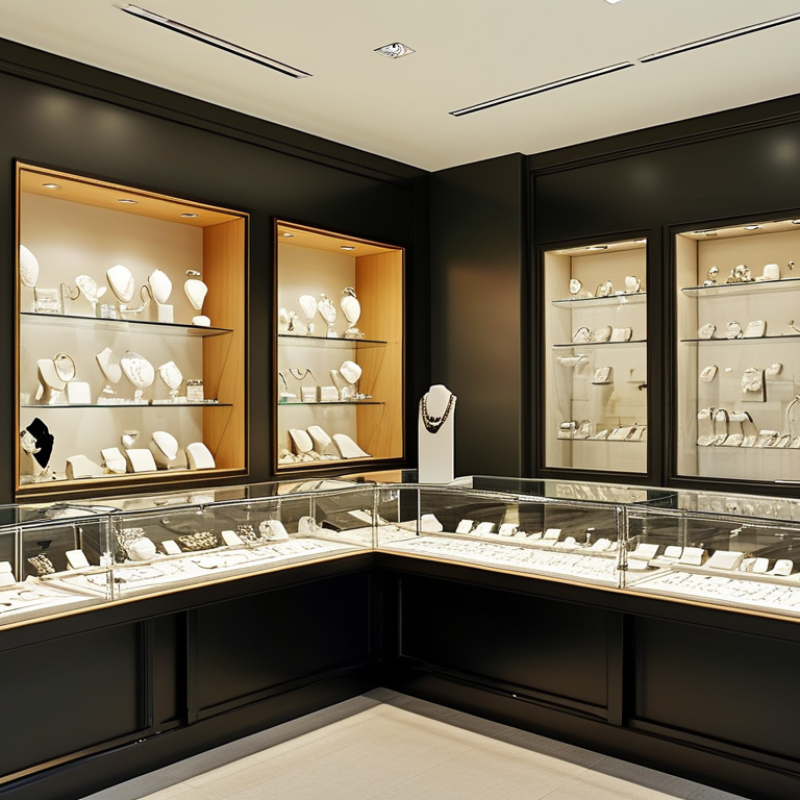
Before choosing jewelry display cases, define what your store must protect, present, and measure. List your jewelry categories, average item value, dimensions, and daily customer traffic. A narrow case may suit delicate rings, while deeper compartments can hold layered necklaces without tangling. Measure the sales floor carefully. Beautiful cases can still create blocked sightlines or uncomfortable staff movement.
Security must match actual risk, not fear. The National Retail Federation’s 2023 National Retail Security Survey reported that external theft represented 36.5% of retail shrink in 2022. Choose laminated glass, reliable locks, controlled access, and clear staff visibility where appropriate. However, excessive barriers may reduce conversation and product handling. That trade-off deserves testing. A case that feels like a fortress may protect merchandise but weaken trust.
Lighting and maintenance define the buying experience. The Illuminating Engineering Society recommends accurate color rendering for merchandise, yet jewelry often looks different under warm store lighting and daylight. Test metals and gemstones under both conditions before installation. Keep glare away from the customer’s eye line. Also record cleaning time, cable access, drawer capacity, and replacement-part availability. The National Retail Federation and Appriss Retail reported $743 billion in U.S. retail returns during 2023, showing why clear product inspection matters. Your display should let customers examine details without unnecessary handling. Small operational flaws are easy to miss. They become expensive later.
Choosing a jewelry display case starts with comparing how each type supports your selling space. Freestanding cases create strong sightlines and can guide customers through a collection. Wall-mounted cases save floor space and suit smaller stores. Countertop cases work well for rings, watches, or limited pieces needing close inspection. They are convenient, but they can quickly make a counter feel crowded.
Layout changes the shopping experience. A linear layout gives customers a clear path and makes product groups easy to compare. Island cases encourage movement around the displays and create more viewing angles. Use corner cases carefully. Dark corners can hide small details and reduce visual trust. Leave enough space between cases for comfortable movement, staff access, and clear conversations.
Glass height matters. Lower cases invite closer viewing, while taller cases improve visibility across the room. Adjustable lighting should reveal metal texture without causing sharp reflections. Neutral backgrounds usually help gemstones and polished surfaces look more accurate. I once placed bright lights too close to a glass panel. The display looked attractive from a distance, but reflections distracted customers up close. That mistake changed my layout decisions.
A reliable plan also considers cleaning, maintenance, and accessibility requirements. Choose durable materials and locks suited to daily retail use. Review the layout during busy hours, not only when the store is empty. Customers often need more space than expected. Simplicity usually performs better.
Compare Jewelry Display Case Types and Layouts
This planning benchmark rates common jewelry display case types from 1 to 5 across visibility, security, display capacity, and floor-space efficiency. Countertop cases suit compact counters and assisted selling, wall-mounted cases maximize floor space, freestanding cases provide access from multiple sides, and tower cases create strong vertical presentation for premium or featured collections.
Choosing jewelry display cases requires more than polished glass and attractive frames. Materials should resist scratches, yellowing, and repeated cleaning. Tempered or laminated glass offers stronger protection than ordinary glass. Acrylic is lighter, but it can scratch easily. I have seen beautiful cases lose clarity within months because staff used abrasive cleaners. That mistake is expensive.
Security must support visibility, not block it. The National Retail Federation reported average retail shrink of 1.6% of sales in its 2023 National Retail Security Survey. For jewelry stores, use anchored cases, concealed hinges, reliable locks, and clear sightlines for staff. Keep valuable pieces away from blind corners. A camera cannot correct poor case placement. Test every lock during busy hours, not only during installation.
Lighting changes how customers judge color, cut, and finish. Choose high color-rendering lighting, ideally with CRI 90 or higher, and reduce glare through angled fixtures and matte interiors. LEDs also produce less heat near delicate materials. The U.S. Department of Energy reports that LED products use up to 75% less energy and last up to 25 times longer than incandescent lighting. Still, brighter is not always better. I sometimes over-light a case, creating reflections that hide fine details. Leave space between items, keep the background calm, and check visibility from a seated customer’s height.
Match display cases with your store design and budget before choosing finishes or features. In my experience, a case should support the room, not compete with it. A bright, open shop may suit slim glass cases with pale metal frames. A traditional interior can handle warmer wood tones and deeper counters. Measure customer pathways carefully. Shoppers need enough space to pause without blocking others. Small details matter.
Set a realistic budget for the complete setup. Include delivery, installation, lighting, locks, cleaning, and future repairs. A lower-priced case may look attractive, but weak hinges or poor lighting can create extra costs. I recommend comparing glass clarity, frame strength, storage capacity, and access security. Ask suppliers for material specifications and maintenance instructions. Reliable information is more useful than polished sales language.
I once focused too much on appearance and underestimated daily cleaning time. That choice looked fine during installation, but fingerprints became frustrating near the entrance. Now, I check how easily staff can reach every surface. Choose case heights that protect products while keeping them comfortable to view. Test the lighting at different times of day. Too much brightness can hide small details. Too little light can make quality pieces seem dull. Your first plan may need revision. That is normal.
Choosing jewelry display cases is not only about glass, finish, or price. Plan the installation before ordering. Measure doorways, elevator clearance, floor levels, and customer aisles. A case may fit the drawing but fail at the entrance. I learned this after a narrow doorway forced a late layout change. Leave service access behind each unit. Check power locations for lighting and security equipment. Keep cables concealed, reachable, and protected from moisture.
Maintenance should be designed into the case. Use laminated or tempered safety glass, stable hinges, and locks that staff can inspect quickly. Ask installers to level every base. Uneven cases can stress doors and create irritating gaps. Clean glass with a soft cloth and a suitable non-abrasive solution. Avoid spraying near seams. Check fasteners, lights, seals, and locks on a written schedule. Small faults become expensive when ignored. Daily checks sound simple, but busy weekends often prove otherwise.
Plan future expansion while the store is empty. Reserve wall outlets, floor capacity, and walking space for additional cases. Modular dimensions can help you add one section without rebuilding the entire display line. Document replacement panels, hardware, measurements, and installation dates. This record supports consistent repairs and safer decisions. Leave flexibility. Sales patterns may change, and a fixed arrangement can age faster than expected. Before expanding, review customer flow, cleaning time, and staff visibility, not just available floor area.
| Planning Dimension | Recommended Data or Benchmark | Why It Matters | Installation / Maintenance Action | Expansion Consideration |
|---|---|---|---|---|
| Customer Viewing Height | Keep the primary viewing zone approximately 900–1,500 mm above finished floor level. | Most customers can inspect jewelry comfortably without excessive bending or reaching. | Confirm case height, plinth height, stool position, and accessibility clearances before fixing the case. | Use modular case heights so future sections maintain a consistent sightline. |
| Aisle and Circulation Space | Plan at least 900 mm for a basic customer route; provide about 1,200 mm where two-way traffic or wheelchair maneuvering is expected. | Adequate circulation reduces congestion and supports safer customer movement. | Measure finished walls, doors, columns, and queue areas rather than relying only on architectural drawings. | Reserve clear zones beside end panels so an additional case can be added without blocking the route. |
| Glass Type and Safety | Use safety glazing appropriate to the case design, such as tempered or laminated glass, with polished or protected edges. | Safety glazing helps reduce injury risk if glass is impacted or breaks. | Inspect glass, joints, hinges, and edge protection during installation and after any impact. | Standardize replacement glass sizes and retain spare hardware information for later additions. |
| Security and Locking | Select lockable doors or drawers, concealed hinges where appropriate, and a secure anchoring method suited to the floor or wall. | Security depends on the complete case system, not only the lock cylinder. | Test every lock, key, drawer stop, anchor, and alarm connection before opening the store. | Use a consistent key-control or electronic access plan that can support additional cases. |
| Display Load | Keep merchandise, trays, shelves, and decorative elements within the manufacturer’s stated shelf and base load ratings. | Overloading can deform shelves, affect door alignment, and increase handling risk. | Record the rated capacity and inspect shelves after merchandising changes or relocation. | Choose adjustable shelves and interchangeable trays to accommodate larger product ranges. |
| Lighting and Heat | Use low-heat LED lighting with color quality suitable for jewelry; keep fixtures ventilated and avoid direct glare on glass. | Appropriate lighting improves color appearance while limiting unnecessary heat and energy use. | Clean lenses, inspect drivers, and replace failed modules using compatible electrical components. | Provide accessible cable routes and spare electrical capacity for future lighting sections. |
| Electrical Planning | Separate lighting and security circuits where practical, and comply with the electrical code applicable to the store location. | Separate circuits simplify fault finding and help prevent one issue from disabling every case. | Label cables, protect connections, and have electrical work completed or checked by a qualified professional. | Install spare conduits, accessible junction points, or reserved circuit capacity during the first fit-out. |
| Temperature and Humidity | Maintain a stable, comfortable indoor environment and avoid placing cases beside radiators, air outlets, or direct sunlight. | Stable conditions help reduce condensation, material movement, tarnishing risk, and customer discomfort. | Check for condensation, dust accumulation, and airflow obstruction during routine inspections. | Keep future case locations away from HVAC discharge paths and high-moisture areas. |
| Cleaning Frequency | Clean glass and high-touch surfaces daily or as needed; perform a detailed inspection at least weekly. | Fingerprints, dust, and residue can reduce product visibility and create a neglected appearance. | Use a clean, non-abrasive microfiber cloth and a cleaner compatible with the glazing and frame finish. | Specify the same surface finishes across new cases to simplify cleaning procedures and supplies. |
| Maintenance Access | Provide service access to lighting drivers, cable connections, locks, hinges, leveling feet, and ventilation points. | Accessible components reduce downtime and avoid unnecessary case disassembly. | Create a maintenance checklist covering alignment, fasteners, locks, glass, lighting, and floor stability. | Select systems with replaceable parts that remain available throughout the planned store life. |
| Floor Loading and Leveling | Verify the combined case and merchandise weight against the floor structure and use adjustable leveling feet where provided. | An uneven or overloaded floor can cause doors to bind, glass to stress, or cases to become unstable. | Level each case, recheck after loading, and inspect for movement after nearby construction work. | Document floor loading limits before reserving areas for heavier safes, counters, or additional cases. |
| Modularity and Reconfiguration | Prefer repeatable modules, removable shelves, interchangeable trays, and reversible panels where the sales concept changes frequently. | Modular components reduce disruption when product categories or store layouts change. | Keep assembly instructions, spare fasteners, finish references, and an inventory of removable components. | Define a standard module width and connection detail before ordering the first group of cases. |
| Expansion Allowance | Reserve approximately 10–20% of the planned display area or infrastructure capacity where growth is expected. | A reserved allowance can prevent costly remodeling when inventory or product categories expand. | Mark reserved zones on the floor plan and do not use them for permanent obstructions or fixed equipment. | Plan future power, data, alarm, lighting, delivery, and customer circulation routes from the beginning. |
| Delivery and Replacement Access | Check door widths, elevator dimensions, turning radii, corridor heights, and the case’s packaged dimensions before ordering. | A case that cannot pass through the delivery route may require costly disassembly or site modification. | Record the approved delivery route and protect floors, walls, corners, and glass during installation. | Retain removable doors or knock-down options for future replacement and store remodeling. |
| Documentation and Handover | Maintain a case schedule containing dimensions, weight, circuit reference, lock details, finish, glass type, and service contacts. | Accurate records make repairs, insurance reviews, audits, and future purchasing more efficient. | Complete a handover inspection with photographs, test results, cleaning instructions, and a maintenance calendar. | Use the same documentation format for every new case so the store can scale without losing control of assets. |
