
Top 10 Wall Mounted Toilet Bowls for Global Buyers

Choosing the right Toilet Bowl Wall Mounted model involves more than comparing shapes, prices, and glossy product images. Global buyers must examine concealed cisterns, carrier frames, flush performance, seat durability, and maintenance access. A compact bathroom in Singapore may need different water-pressure performance than a renovation project in Canada. Local plumbing dimensions matter. So do certification requirements, spare-parts availability, and installer experience.

Bathroom design expert Barbara Sallick has said, β€œA bathroom should be beautiful, but it must work hard.” That principle guides this selection. The strongest wall-mounted bowls combine clean geometry with practical engineering. Their lifted design can simplify floor cleaning, especially beneath the bowl and around the drain connection. Some models also provide adjustable heights, quieter flushing, and rimless interiors. These details feel small. They become important every day.

This guide reviews ten options for international purchasing teams, developers, distributors, and homeowners. Each entry considers installation complexity, bowl shape, flushing technology, material quality, user comfort, and long-term serviceability. A lower price may hide expensive frame replacement or difficult access later. A premium finish may still disappoint if the seat loosens or compatible parts disappear.

No ranking fits every bathroom. Water conditions vary. Installation mistakes happen. Even an attractive model can fail a project’s practical needs. Readers should verify measurements, warranty terms, regional approvals, and after-sales support before ordering. The goal is not to find one perfect bowl. It is to identify the safest, most suitable choice for each market, building type, and daily routine.
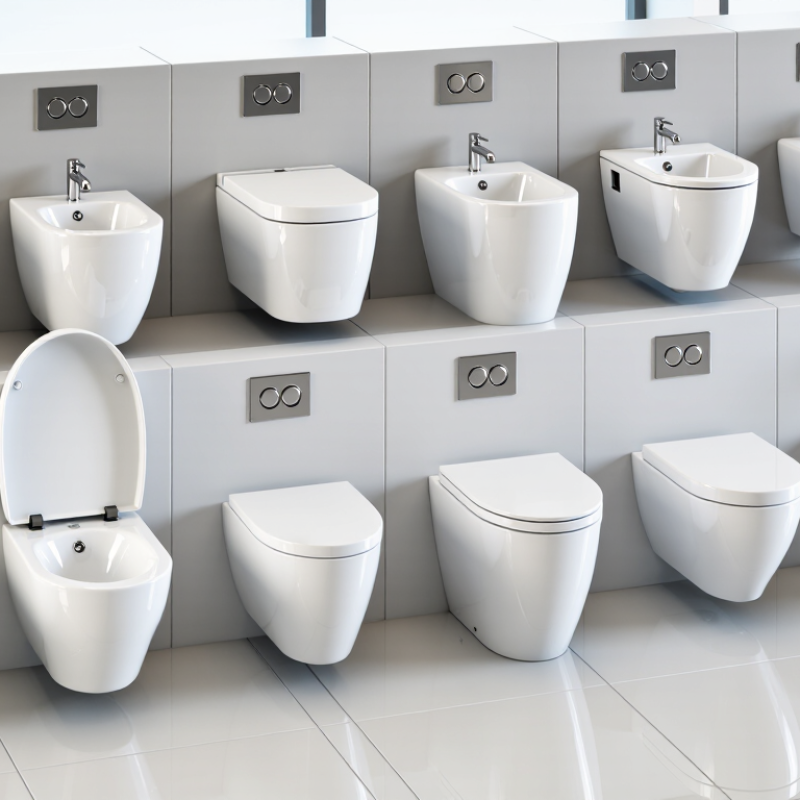
Top 10 Wall Mounted Toilet Bowls for Global Buyers

Wall-Mounted Toilet Bowls: Definition, Structure, and Main Features

A wall-mounted toilet bowl is fixed to a concealed support frame, not directly to the bathroom floor. The frame transfers the user’s weight to the wall and floor structure. A hidden cistern releases water through a flush plate, while the ceramic bowl appears to float above the finished floor. This layout exposes fewer joints and creates a cleaner visual line.

Its main components include the ceramic pan, carrier frame, flush valve, inlet pipe, waste outlet, and access panel. The frame must match the wall thickness and local drainage position. Installation quality matters more than appearance. A weak fixing system can cause movement, cracked seals, or noisy flushing. That risk is often underestimated.

Water efficiency also deserves careful comparison. The U.S. EPA WaterSense specification recognizes high-efficiency toilets using 1.28 gallons per flush, or less. EPA estimates that toilets account for nearly 30% of indoor household water use. These figures make flush performance important for global buyers. However, lower water use does not automatically mean better cleaning. Buyers should check flush testing, bowl rinse coverage, spare-part access, and certification for the destination market. β€œSpace-saving” can be misleading; the concealed frame still needs service clearance. Poor planning may reduce usable space behind the wall.

Top 10 Wall Mounted Toilet Bowls for Global Buyers - Wall-Mounted Toilet Bowls: Definition, Structure, and Main Features

Wall-mounted toilet bowls are suspended from a concealed carrier frame, leaving the floor fully accessible for cleaning. The chart compares representative dimensions commonly used in international residential and commercial installations.

Compact models generally reduce projection, while comfort-height and accessibility-oriented bowls provide greater seat height. Actual dimensions may vary according to local plumbing standards, carrier-frame specifications, and installation requirements.

How Wall-Mounted Toilet Systems Work: Frames, Cisterns, and Flush Mechanisms

A wall-mounted toilet depends on a concealed carrier frame, not the ceramic bowl alone. The steel frame transfers user weight into the floor and wall structure. Adjustable legs help set the rim height, often between 400 and 480 millimetres. Installation experience shows that weak backing or poor alignment causes movement, cracked seals, and difficult repairs. The wall must be opened carefully, because the cistern sits behind the finished surface.

The concealed cistern stores water and connects to a flush valve through a service opening. Many systems use dual-flush controls, such as 3 litres for liquid waste and 6 litres for solid waste. The U.S. EPA WaterSense Tank-Type Toilet Specification, Version 2.0, limits certified toilets to 1.28 gallons per flush and requires a 350-gram waste-removal test. These figures are useful, but real performance also depends on pipe slope, water pressure, and maintenance. A powerful flush is not always a better flush.

Tips: Confirm the frame load rating, finished-wall thickness, access-panel size, and spare valve availability before purchase. Test the button feel after tiling. It sounds minor. It is not. Allow clearance around the cistern and inspect the shut-off valve before closing the wall. Some installation guides appear clear, yet local plumbing requirements may differ. A qualified installer should verify connections and leak-test the system before sealing everything permanently.

Key Buying Criteria for Global Buyers: Size, Materials, Standards, and Price

Top 10 Wall Mounted Toilet Bowls for Global Buyers

For global buyers, size should be checked before appearance. Most wall-mounted bowls project about 490–560 mm from the finished wall. Width often ranges from 350–380 mm. Confirm seat height, rough-in depth, drainage position, and bathroom door clearance. Measure twice. A compact bowl may suit a small apartment, but it can feel uncomfortable for taller users. Review the concealed carrier’s load rating and access panel before approving the layout.

Material affects hygiene, durability, and maintenance. Vitreous china with a smooth, low-absorption glaze is common and practical. Inspect the rim, fixing holes, and trapway for uneven glazing. Stainless steel frames resist corrosion, but thin components may reduce confidence during installation. I have seen projects focus on the bowl while overlooking the frame. That mistake can create costly wall repairs. Ask for material specifications, water absorption data, and production quality records.

Standards and price require careful comparison across markets. Check compatibility with local plumbing sizes, flushing requirements, and applicable certifications. EN, ISO, ASME, or national standards may differ, so request current test reports instead of relying on catalog claims. Price should include the bowl, seat, carrier, flush plate, freight, installation, and replacement parts. The cheapest quotation is not always economical. A slightly higher-cost ceramic bowl may offer better glaze consistency and easier cleaning. Keep records. Recheck every measurement before placing the order.

Top 10 Wall-Mounted Toilet Bowls: Features, Applications, and Market Positioning

Top 10 Wall-Mounted Toilet Bowls for Global Buyers

Wall-mounted toilet bowls are gaining attention in compact homes, hotels, offices, and healthcare facilities. The WHO and UNICEF Joint Monitoring Programme reported that 3.5 billion people lacked safely managed sanitation in 2022. This figure highlights a global need for dependable sanitation products, although a wall-mounted bowl alone cannot solve infrastructure gaps.

The top ten positions should reflect practical applications, not appearance alone. Compact bowls suit small apartments. Rimless designs simplify cleaning. Dual-flush models support water efficiency. Concealed-cistern systems create cleaner bathroom lines. Height-adjustable options improve accessibility.

Bidet-ready bowls support premium residential projects. Low-noise flushing benefits hotels and shared housing. Heavy-duty ceramic models fit commercial washrooms. Easy-maintenance surfaces reduce service time. Smart-compatible bowls target luxury developments.

Evidence matters.

The European Commission’s EU Ecolabel criteria emphasize water efficiency, durability, and material performance for sanitary appliances. Buyers should also review EN 997 compliance, flushing tests, load resistance, spare-part access, and installation training. These details influence market positioning more than glossy photography.

In urban projects, concealed systems can save visible floor space, but repairs may become harder. That trade-off deserves honest attention. A lower purchase price may also hide higher installation costs. According to UN DESA’s World Urbanization Prospects, 68% of the global population may live in urban areas by 2050. This supports demand for space-efficient bathroom equipment, but regional plumbing standards and maintenance skills still determine real product value.

Installation, Maintenance, and Regional Considerations for International Buyers

Wall-mounted toilet bowls save floor space, but installation demands careful planning. The carrier frame must connect to solid structural support, not decorative wall panels. A qualified plumber should check the rough-in depth, drain alignment, and local plumbing requirements before closing the wall. Small errors become expensive after tiling.

Concealed cisterns need an accessible service opening. Without one, a minor valve problem may require wall removal. Check water pressure and supply connections before installation. Some regions use different inlet sizes or drainage standards. Local tradespeople usually understand these variations better than generic online diagrams. That practical advice matters.

Maintenance is simple when access is planned well. Clean the bowl with a non-abrasive product, and inspect flush controls for sticking or slow response. Hard-water areas may need more frequent descaling. In humid climates, check seals and nearby joints for moisture. In colder regions, protect exposed pipework from freezing.

User comfort also varies by region. Confirm seat height, bathroom clearance, and accessibility expectations before choosing a model. Replacement parts should be available locally, not only through overseas shipping. This point is often overlooked. A quiet flush may still perform poorly if the water supply is weak. Installation guides can also be unclear, so documenting pipe positions with photographs is a sensible habit. Even experienced installers occasionally misjudge wall depth.

Top 10 Wall Mounted Toilet Bowls for Global Buyers - Installation, Maintenance, and Regional Considerations for International Buyers

Comparison of common wall-mounted toilet bowl configurations using typical industry specifications. Actual dimensions, connections, and certifications should be verified with the selected supplier before purchase.

Rank Wall-Mounted Toilet Bowl Type Best For Typical Size
(W Γ— D Γ— H)
Drain Outlet / Rough-In Typical Water Use Installation Requirements Maintenance Considerations Regional Considerations Common Standards or Checks
1 Standard Rimless Wall-Hung Bowl Residential bathrooms and general international projects 360–380 Γ— 500–540 Γ— 350–400 mm Usually 100 mm or 110 mm outlet; concealed carrier required 4.5–6.0 L per flush Requires a compatible in-wall carrier, finished-wall support, concealed cistern, flush plate, and accurately positioned waste pipe. Rimless geometry improves cleaning access. Service access is normally through the flush-plate opening. Confirm local outlet diameter, carrier load rating, wall thickness, and concealed-cistern availability. Check local plumbing code, structural support requirements, water-efficiency rules, and ceramic quality testing.
2 Compact Wall-Hung Bowl Small apartments, hotels, and space-limited bathrooms 350–370 Γ— 450–490 Γ— 350–400 mm Commonly 100 mm or 110 mm outlet 4.5–6.0 L per flush Needs precise carrier alignment because the shorter projection leaves less tolerance around the finished wall and access area. Use non-abrasive cleaners; compact bowls may require careful access for cleaning around the rear connection. Verify seat compatibility, user comfort, minimum bathroom clearances, and accessibility rules where applicable. Check minimum clearances, flush performance, ceramic dimensions, and local building regulations.
3 Extended-Projection Wall-Hung Bowl Large bathrooms and comfort-focused residential installations 370–390 Γ— 540–600 Γ— 350–410 mm Usually 100 mm or 110 mm outlet 4.5–6.0 L per flush Requires adequate room depth, strong carrier framing, and careful coordination with door swings and circulation space. The larger bowl is generally easy to access, but the longer front projection can require more frequent floor and wall cleaning. Confirm bathroom planning dimensions and whether the project follows accessibility or universal-design requirements. Review clear-floor-space requirements, carrier load data, flush testing, and water-use limits.
4 Accessible-Height Wall-Hung Bowl Accessible homes, healthcare facilities, and universal-design projects 360–390 Γ— 540–600 Γ— 400–460 mm Usually 100 mm or 110 mm outlet 4.5–6.0 L per flush Carrier height must be adjustable or specifically rated for the selected seat height; grab-bar reinforcement may be required. Maintain clear access to the flush plate and inspect seat fixings and support hardware regularly. Accessible height, transfer space, grab-bar positions, and approach clearances vary by jurisdiction. Check applicable accessibility legislation, carrier load capacity, flush activation reach, and slip-resistant requirements.
5 Heavy-Duty Commercial Wall-Hung Bowl Offices, schools, airports, and high-traffic public washrooms 360–390 Γ— 520–590 Γ— 350–410 mm Commonly 100 mm or 110 mm outlet 4.5–6.0 L per flush Use a commercial-grade carrier with verified load capacity and robust wall framing; protect concealed components during construction. Select durable vitreous china, tamper-resistant fixings, replaceable flush components, and easy-access service openings. Confirm commercial plumbing duty ratings, vandal-resistance expectations, cleaning protocols, and spare-parts access. Check commercial plumbing standards, impact or load testing, water-efficiency regulations, and hygienic design requirements.
6 Back-to-Wall-Compatible Wall-Hung Bowl Projects requiring flexible concealed-service layouts 360–380 Γ— 500–560 Γ— 350–410 mm Typically 100 mm or 110 mm outlet 4.5–6.0 L per flush Confirm that the bowl, carrier, cistern, flush pipe, and wall panel are designed as one compatible system. Inspect concealed flush connections through the service opening and keep replacement seals available. Useful where concealed cistern systems are common; local availability of compatible carrier parts is important. Verify system compatibility, leak testing, access-panel dimensions, and local concealed-installation rules.
7 Dual-Flush Optimized Wall-Hung Bowl Water-conscious residential and commercial developments 360–380 Γ— 500–550 Γ— 350–410 mm Usually 100 mm or 110 mm outlet 3.0/4.5 L or 3.0/6.0 L per flush The bowl must be paired with a compatible dual-flush cistern, flush plate, and inlet valve; pressure and flow must be adequate. Keep the flush valve, inlet valve, and flush plate accessible; clean mineral deposits according to water hardness conditions. Verify whether local regulations measure full flush, reduced flush, or average effective flush volume. Check water-efficiency labeling, flush-performance testing, backflow protection, and local plumbing approval.
8 Washdown Wall-Hung Bowl Markets prioritizing simple hydraulics and easy servicing 360–390 Γ— 500–570 Γ— 350–410 mm Commonly 100 mm or 110 mm outlet 4.5–6.0 L per flush Requires a properly aligned horizontal or near-horizontal waste connection and a carrier designed for the bowl geometry. Generally straightforward to clean and service; inspect the trapway and seals if drainage performance declines. Performance can vary with drainage design, water pressure, pipe slope, and local waste-pipe practices. Check drainage-flow performance, trap-seal requirements, leak testing, and applicable ceramic standards.
9 Quiet-Flush Wall-Hung Bowl Hotels, apartments, and bathrooms near bedrooms 360–380 Γ— 500–560 Γ— 350–410 mm Usually 100 mm or 110 mm outlet 4.5–6.0 L per flush Use acoustic insulation around the concealed cistern and flush pipe where permitted, while preserving service access. Inspect flush valves and pipe supports for vibration; avoid harsh chemicals that can damage seals and finishes. Acoustic performance depends heavily on wall construction, pipe support, water pressure, and installation quality. Review plumbing noise guidance, concealed-cistern access, leak testing, and local water-supply requirements.
10 Bidet-Ready Wall-Hung Bowl Projects planning future bidet-seat or hygiene-accessory upgrades 360–390 Γ— 500–570 Γ— 350–410 mm Typically 100 mm or 110 mm outlet 4.5–6.0 L per flush Confirm seat hinge spacing, electrical outlet location, water supply route, residual-current protection, and service clearances. Keep electrical and water connections accessible; inspect the seat interface, inlet filter, and isolation valve periodically. Electrical voltage, plug type, bathroom-zone rules, water-pressure limits, and bidet-seat certification differ by market. Check electrical safety certification, bathroom electrical zones, backflow protection, and local plumbing requirements.

International purchasing note: Dimensions and water-use figures are typical ranges for comparable wall-mounted toilet systems, not guaranteed specifications for every product. Before ordering, confirm technical drawings, carrier compatibility, outlet size, flush volume, seat dimensions, certifications, packaging, and replacement-part availability for the destination market.