Choosing among construction firms is a serious decision for global buyers. The right partner can shape a project’s cost, safety, schedule, and long-term value. Yet international comparisons rarely offer a simple winner. Project scale, location, technical demands, and local regulations change the answer.
This guide examines leading firms through practical buyer concerns. These include documented experience, engineering capability, financial strength, safety performance, and delivery reliability. It also considers how firms manage permits, supply chains, subcontractors, and environmental responsibilities. A company with impressive towers may not suit a remote industrial facility. Details matter. Buyers should study completed projects, not only polished presentations.
Public rankings can help, but they are not complete evidence. Some firms disclose extensive data, while others provide limited information. That difference can affect comparisons. Claims about sustainability also require careful review, including measurable emissions targets and independent verification. Promises are not proof.
The strongest candidates usually demonstrate consistent performance across several markets. They communicate clearly when designs change or risks appear. They explain contract terms, warranties, payment structures, and dispute procedures without hiding behind technical language. Local knowledge can be equally important. A globally recognised firm may still need trusted regional partners to navigate materials, labour, logistics, and approvals.
This overview is designed to support informed early research, not replace professional due diligence. Buyers should confirm licenses, references, insurance, financial records, and project-specific expertise before signing. Conditions vary. Careful comparison remains essential.

What Are the Top Construction Firms for Global Buyers?
A globally competitive construction firm offers more than an attractive bid. It combines verified project experience, stable finances, and strong technical leadership. Buyers should examine completed buildings in similar climates, not only impressive portfolios. A coastal project demands different waterproofing skills than a high-rise in a dry region.
Reliable firms explain their quality systems clearly. They document material testing, inspection stages, worker training, and site safety procedures. Independent certifications can support these claims, but certificates alone prove little. Ask who performs inspections and how defects are corrected. Honest reporting matters.
Local knowledge is equally important. Strong contractors understand permits, labor practices, environmental requirements, and import procedures in each market. They also use clear contracts with realistic schedules and defined responsibilities. Digital progress reports, site photographs, and measured milestones help overseas buyers monitor work without constant travel.
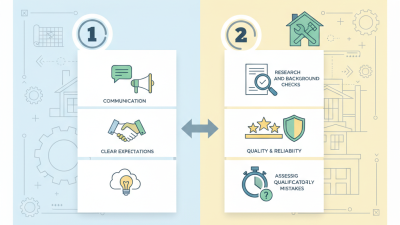
Communication can reveal professional maturity. A capable team provides multilingual contacts, responds to technical questions, and records decisions carefully. Supply chain planning should include backup suppliers for critical materials. Delays happen.
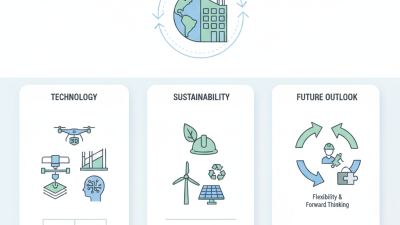
Sustainable construction is now part of global competitiveness. Firms should reduce waste, manage water use, and select durable materials suited to local conditions. However, sustainability claims deserve practical evidence, such as energy data or waste records. Even experienced contractors make mistakes. The most trustworthy ones acknowledge them early, explain the cause, and improve the process. That behavior often matters more than polished marketing.
Global buyers typically favor construction firms that can operate at scale, manage complex infrastructure programs, and deliver reliably across markets. The chart compares the size of the opportunity with the investment pressure shaping international construction demand.
Sources: Global Construction Perspectives and Oxford Economics, Global Construction 2030; Global Infrastructure Hub, Global Infrastructure Outlook. Values are rounded and shown in USD trillions.
International buyers need more than a long project list when choosing a construction firm. The strongest candidates show experience across borders, not only impressive domestic buildings. They understand local permits, labor rules, import procedures, and climate risks. Their teams can explain these issues in clear, practical language.
A reliable firm should provide verified financial records, recent client references, and evidence of completed projects. Ask to inspect finished sites, not only digital images. Look for clean handover areas, labeled equipment, safe access routes, and maintenance records. Quality systems matter, but daily supervision matters more. A project manager who documents delays honestly may be more valuable than one promising perfect delivery. Perfect plans rarely survive real conditions.
International buyers should also examine contract terms, payment stages, insurance, warranties, and dispute procedures. Independent legal and technical reviews can expose expensive gaps before construction begins. Digital tools, such as progress dashboards and building information models, improve visibility when owners live abroad. However, technology cannot replace local judgment. Time zones, translation issues, and cultural expectations still create friction. This is where many evaluations become too optimistic. A capable firm should identify its weak points and explain how it controls them. Regular video inspections, dated site photographs, material samples, and written change approvals create a dependable record. The leading choice is not always the largest contractor. It is the firm that combines proven delivery, transparent communication, and accountable local execution.
Global buyers should compare construction firms through expertise, scale, and regional reach. The 2024 Top 250 International Contractors report recorded international revenue of about US$499 billion in 2023. This figure shows market capacity, not guaranteed project quality. A firm may manage complex airports well but struggle with hospitals, housing, or industrial facilities.
Expertise should match the asset and local conditions. Check completed projects, safety performance, dispute history, and digital delivery experience. Regional reach also needs careful testing. A broad office network can support permits, labor, and procurement. However, local subcontractor quality may differ sharply between regions. GlobalData’s 2024 construction outlook identified infrastructure and energy as major growth areas. These sectors require stronger engineering controls and longer maintenance planning. Scale matters when financing, materials, and risk reserves are demanding. Yet smaller specialists may offer closer site management. Bigger is not always better.
Tip: Request three regional case studies, not one global showcase. Compare completion dates, change-order rates, safety records, and post-handover support. Ask who will actually lead the site. That answer can expose a weak regional model. Review currency exposure, climate risks, and local workforce plans before signing. Industry surveys often report optimistic pipelines, but forecasts can miss political delays and material shocks. My assessment would remain provisional until site visits, client references, and independent cost checks are complete.
| Anonymized Firm Profile | Primary Expertise | Approx. Annual Revenue Scale | International Operations | Typical Project Value | Regional Reach | Delivery Models | Best Fit for Global Buyers |
|---|---|---|---|---|---|---|---|
| Profile A Global diversified contractor |
Transport infrastructure, civil engineering, utilities, industrial facilities | More than US$10 billion | Projects and operating units across 40+ countries | US$250 million to US$2 billion+ | Europe, Asia-Pacific, Middle East, Africa, and the Americas | EPC, design-build, concessions, public-private partnerships | Governments and institutional buyers seeking a single partner for complex infrastructure programs |
| Profile B International building specialist |
Airports, hospitals, commercial buildings, high-rise construction, mixed-use developments | US$5 billion to US$10 billion | Active in approximately 25–40 countries | US$100 million to US$1 billion | Europe, North America, Asia-Pacific, and selected Gulf markets | Construction management, design-build, general contracting, negotiated procurement | Private developers and public-sector buyers prioritizing building quality, safety, and schedule control |
| Profile C Energy and industrial EPC group |
Power generation, renewable energy, oil and gas, process plants, water treatment | More than US$10 billion | Long-term operations in 30+ countries | US$300 million to US$3 billion+ | Middle East, Africa, Asia-Pacific, Europe, and Latin America | EPC, EPCM, turnkey delivery, commissioning, operations and maintenance | Industrial owners requiring technical integration, commissioning capability, and lifecycle support |
| Profile D Infrastructure and transport leader |
Railways, metros, highways, bridges, tunnels, ports, and airports | US$5 billion to US$10 billion | Projects in approximately 20–35 countries | US$200 million to US$2 billion | Europe, Asia-Pacific, North America, the Middle East, and Latin America | Design-build, alliance contracting, concessions, PPP, and long-term maintenance | Public authorities seeking integrated transport delivery and long-term asset management |
| Profile E Regional-to-global civil contractor |
Roads, bridges, water systems, urban development, and public facilities | US$1 billion to US$5 billion | Strong domestic base with activity in 10–20 foreign markets | US$50 million to US$500 million | Primarily one home region with selective international expansion | General contracting, joint ventures, design-build, and subcontracted specialist delivery | Buyers valuing local relationships, competitive pricing, and flexible joint-venture structures |
| Profile F Specialist sustainable-build contractor |
Green buildings, data centers, logistics facilities, advanced manufacturing, and energy efficiency | US$1 billion to US$5 billion | Operations or projects in approximately 10–25 countries | US$75 million to US$750 million | North America, Europe, Asia-Pacific, and selected Middle Eastern markets | Design-build, construction management, turnkey fit-out, and performance-based contracts | Corporate buyers with carbon-reduction targets, demanding technical specifications, and fast-track schedules |
Global buyers should rank construction firms by verified delivery, not headline size. Engineering News-Record’s 2024 Top 250 International Contractors reported approximately $499.6 billion in overseas revenue for 2023. That figure shows market reach, but it does not prove project quality.
Buyers should examine comparable buildings, defect records, safety performance, and handover evidence. Ask for photographs, inspection certificates, and references from projects completed in similar climates.
Financial strength deserves equal attention. Audited statements should show stable cash flow, manageable debt, and sufficient working capital for long procurement cycles. Credit assessments can reveal pressure hidden by strong revenue growth.
KPMG’s 2023 Global Construction Survey reported that only 31% of projects met their budgets within a 10% range. Schedule performance was weaker, with only 25% meeting the same tolerance.
These figures make contingency planning essential. A low bid may become expensive after design changes, claims, and delayed materials.
Delivery records need careful interpretation. A contractor can report many completed projects while transferring risk through subcontractors. Buyers should review payment history, change-order frequency, commissioning results, and post-handover response times.
Look closely at the last ten projects. Patterns matter. Digital progress dashboards also help, but they are not perfect. Some data arrives late or reflects optimistic reporting.
Independent quantity surveys, staged inspections, and contract-based milestones provide stronger evidence. A practical evaluation may still miss local political, currency, or supply-chain risks.
That uncertainty deserves a priced allowance, not a vague promise.
Choosing the right construction partner matters more than selecting the largest firm on a ranking list. A global buyer should examine completed projects with similar climate, scale, and technical demands. A coastal warehouse requires different expertise from a mountain hospital. Ask for verifiable client references, site photographs, safety records, and evidence of completed handovers.
Strong firms explain local building codes without hiding behind technical language. They also identify permit risks, material shortages, labor limits, and currency exposure before signing. Request a clear responsibility matrix. It should show who manages design changes, inspections, procurement, testing, and final approval. A reliable partner provides realistic schedules, not attractive promises. Monthly progress reports should include photographs, cost changes, open risks, and delayed tasks.
Look beyond the sales presentation. Visit an active site if possible. Observe housekeeping, worker protection, storage conditions, and communication between supervisors and subcontractors. Digital tools can improve coordination, but they cannot repair poor judgment. A detailed contract should define payment milestones, quality standards, insurance, dispute procedures, and warranty duties. Independent legal and technical reviews are sensible for cross-border projects. Even experienced buyers can overlook local tax rules or approval timelines. That mistake becomes expensive.
Some selection decisions remain imperfect. A lower bid may reflect efficient planning, or missing scope. An impressive portfolio may conceal weak supervision today. Keep written records, test assumptions, and require evidence before trusting confidence. Clear communication often matters more than polished presentations.