
Why Are Construction Solutions Essential for Global Buyers?
Global buyers rarely purchase materials alone. They purchase certainty, coordination, and a dependable path from design to handover. Construction solutions connect these needs across suppliers, engineers, contractors, and local project teams. They may include structural systems, prefabricated components, site services, digital planning, and technical support. When these elements work together, a warehouse in Rotterdam, a clinic in Nairobi, or a housing project in Santiago can move forward with fewer surprises.
The strongest solutions begin with evidence. Experienced providers study soil conditions, climate exposure, transport routes, installation skills, and maintenance capacity before recommending products. A coastal project may need corrosion-resistant fixings. A remote site may require flat-packed units, clear manuals, and spare parts that arrive with the original shipment. These details influence cost, safety, schedule, and long-term performance. International buyers also need documented specifications, traceable materials, quality inspections, and responsive communication. Expert advice matters, but it should remain transparent and open to verification. No solution fits every market perfectly. That is easy to forget.
Reliable construction solutions also respect regional standards, procurement procedures, environmental responsibilities, and worker safety expectations. A supplier should explain limitations rather than promise effortless results. Site photographs, inspection records, warranty terms, and installation training can make this difference visible. Even then, a plan may need adjustment after heavy rain, delayed customs clearance, or unexpected ground conditions. That is not failure by itself. It is a reason to manage risk honestly and improve the process. For global buyers, the real value lies in practical integration: solutions that can be understood, delivered, installed, maintained, and trusted across borders.
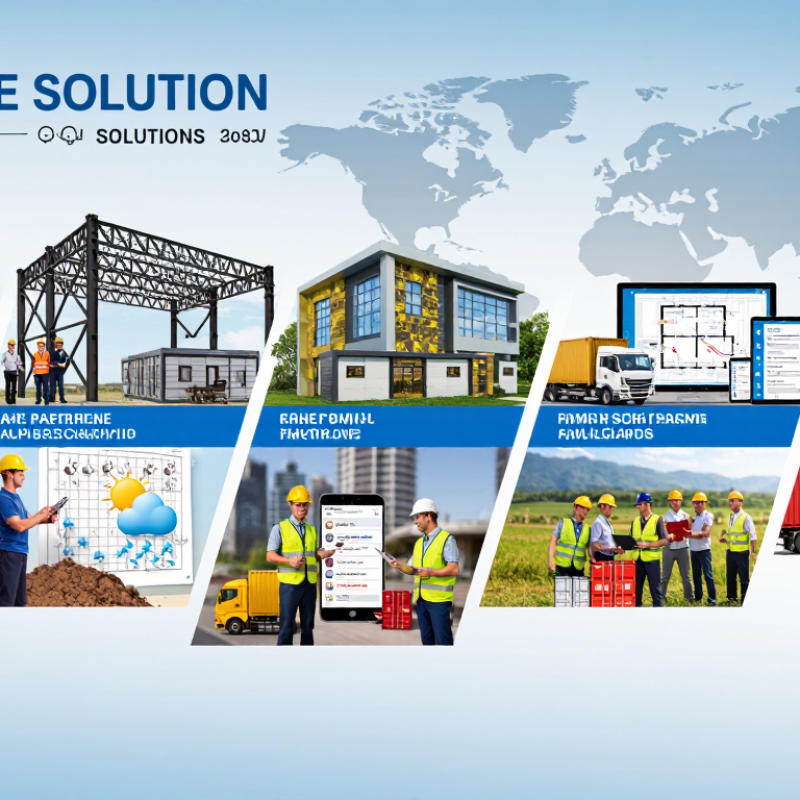
What Construction Solutions Include for Global Buyers
Why Are Construction Solutions Essential for Global Buyers?
What Construction Solutions Include for Global Buyers
For global buyers, construction solutions include much more than products delivered to a project site. They combine design support, material selection, engineering coordination, logistics, installation guidance, and after-sales service. A reliable solution should explain each stage clearly, from the first drawing to the final inspection.
It often begins with project requirements, site conditions, local building codes, and budget limits. Technical teams may provide layout drawings, quantity lists, performance data, and installation instructions. Material specifications should identify dimensions, finishes, tolerances, and testing methods. Clear documents reduce misunderstandings across languages and time zones. Details matter.
Quality control is another essential part. Buyers may need factory inspections, sample approval, production records, and shipment checks. Packaging should protect materials from moisture, impact, and long-distance handling. Delivery planning must consider customs documents, transport schedules, storage space, and possible delays. Small errors can become expensive onsite.
Practical support continues after delivery. Remote guidance, technician training, replacement procedures, and maintenance advice help local teams work with confidence. Yet no solution is flawless. Site measurements may change, communication may fail, or a selected material may perform differently than expected. Responsible suppliers should acknowledge these risks and adjust the plan openly. That honesty builds trust. A strong construction solution is not only efficient; it remains understandable, traceable, and workable for the people using it.
Why Are Construction Solutions Essential for Global Buyers? - What Construction Solutions Include for Global Buyers
| Construction Solution Area | What It Includes for Global Buyers | Typical Deliverables or Data | Common International References | Value for Global Procurement |
|---|---|---|---|---|
| Project Feasibility and Planning | Site assessment, scope definition, preliminary cost planning, schedule development, risk identification, and constructability review. | Project brief, site constraints register, preliminary bill of quantities, milestone schedule, and risk matrix. | Local planning regulations, environmental requirements, applicable building codes, and contractual conditions. | Helps buyers compare suppliers consistently and identify technical, financial, and regulatory risks before ordering. |
| Architectural and Engineering Design | Concept design, structural calculations, mechanical and electrical coordination, shop drawings, and design revisions. | 2D drawings, 3D models, specifications, calculations, material schedules, and approved-for-construction documentation. | ISO 19650 principles for information management, Eurocodes, local structural codes, and project-specific design standards. | Reduces design conflicts and allows products to be adapted to different climates, codes, site conditions, and buyer requirements. |
| Materials and Component Selection | Selection of structural, architectural, mechanical, electrical, insulation, finishing, and safety components according to project specifications. | Technical datasheets, material schedules, samples, certificates of conformity, safety data sheets, and product warranties. | ASTM or EN test methods, applicable national standards, fire classifications, energy-efficiency requirements, and sustainability criteria. | Improves technical compatibility, product traceability, service life assessment, and customs documentation accuracy. |
| Quality Assurance and Quality Control | Inspection and test plans, incoming-material checks, production inspections, dimensional checks, functional testing, and corrective actions. | Inspection reports, test results, nonconformance reports, photographic records, factory acceptance records, and release approvals. | ISO 9001 quality-management principles, project inspection plans, contract specifications, and applicable product standards. | Provides objective evidence that supplied goods and completed work meet agreed technical and contractual requirements. |
| Compliance and Certification Support | Regulatory review, document preparation, product testing coordination, building-permit support, and conformity assessment. | Declarations of conformity, inspection certificates, test reports, fire-performance documents, and permit submission packages. | National building codes, electrical and fire regulations, occupational safety rules, and project authority requirements. | Lowers the risk of rejected shipments, delayed approvals, rework, penalties, and non-compliant installations. |
| Manufacturing and Prefabrication | Cutting, forming, welding, assembly, modular fabrication, surface treatment, labeling, and production tracking. | Production drawings, batch records, weld records where applicable, dimensional reports, packing lists, and serial or lot identification. | Applicable fabrication standards, welding qualification requirements, material traceability procedures, and approved project drawings. | Improves consistency, reduces site labor, supports repeat orders, and makes production status easier to monitor remotely. |
| International Logistics and Packaging | Export packaging, container or cargo planning, shipping-document preparation, cargo protection, and delivery coordination. | Commercial invoice, packing list, transport document, certificate of origin when required, HS-code information, and loading photographs. | Incoterms® 2020 rules, customs regulations, wood-packaging requirements, dangerous-goods rules where applicable, and destination-country import procedures. | Clarifies responsibilities, reduces transit damage, supports customs clearance, and improves delivery predictability. |
| Installation and Commissioning | Installation instructions, site supervision, assembly support, equipment testing, system balancing, and handover preparation. | Method statements, installation manuals, commissioning records, punch lists, as-built drawings, and operator training materials. | Local health and safety regulations, manufacturer installation requirements, inspection procedures, and approved construction documents. | Helps achieve the intended performance and reduces installation errors, commissioning delays, and unclear site responsibilities. |
| Sustainability and Lifecycle Performance | Energy-efficiency review, material durability assessment, waste reduction, water-use considerations, and maintenance planning. | Energy calculations, environmental product information where available, maintenance schedules, durability data, and waste-management records. | ISO 14001 environmental-management principles, local energy codes, life-cycle assessment methods, and project sustainability criteria. | Supports long-term operating-cost control, environmental reporting, durability decisions, and compliance with sustainability targets. |
| After-Sales Service and Spare Parts | Technical support, maintenance guidance, replacement-part planning, troubleshooting, warranty administration, and service training. | Operation and maintenance manuals, spare-parts lists, service records, warranty terms, response procedures, and training certificates. | Contract warranty clauses, local service regulations, equipment maintenance requirements, and occupational safety procedures. | Protects asset availability, extends service life, and gives buyers a clear process for resolving technical issues after delivery. |
| Digital Documentation and Project Coordination | Centralized document control, revision management, progress reporting, remote inspections, data exchange, and stakeholder coordination. | Document register, revision history, inspection dashboard, progress photographs, approval workflow, and final digital handover file. | ISO 19650 information-management principles, project document-control procedures, cybersecurity requirements, and contract data protocols. | Makes cross-border collaboration more transparent, reduces version conflicts, and gives buyers auditable project information. |
Note: Applicable codes, certifications, testing methods, customs procedures, and project deliverables vary according to the destination country, construction type, contract, and authority requirements.
Related Posts
-

Exploring the Future of Construction Technology in a World Under Construction
-

Understanding the Impact of Modern Construction Work on Urban Development
-

Top Structural Contractors What You Need to Know
-

2026 Top Residential Construction Contractors to Watch?
-

How to Source Building and Construction Materials at China Import Expo?
-

Top Structural Contractors in China for Global Sourcing Needs?